The Meeting That Went Differently
A dramatized community hospital board meeting — fictional health system, real governance dynamics — showing what changes when an AI has a seat at the table.
Insights
Thoughtful essays and practical guidance for hospital leaders navigating complex decisions.
A dramatized community hospital board meeting — fictional health system, real governance dynamics — showing what changes when an AI has a seat at the table.
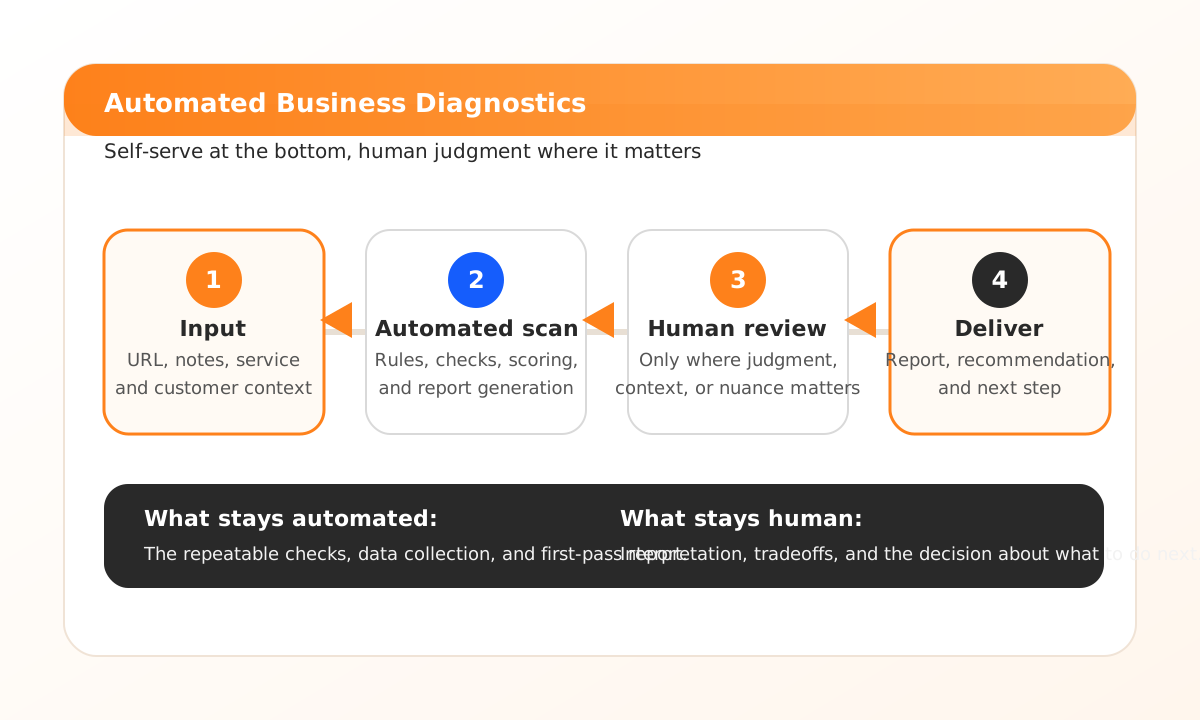
A working workflow for small business owners who know they should be posting online but never get around to it.
Why good people in well-run hospitals still end up in the wrong conversation, and what a structural fix might look like.

How connecting your Google Business Profile to your website structured data helps both AI search engines and traditional search understand who you actually are.
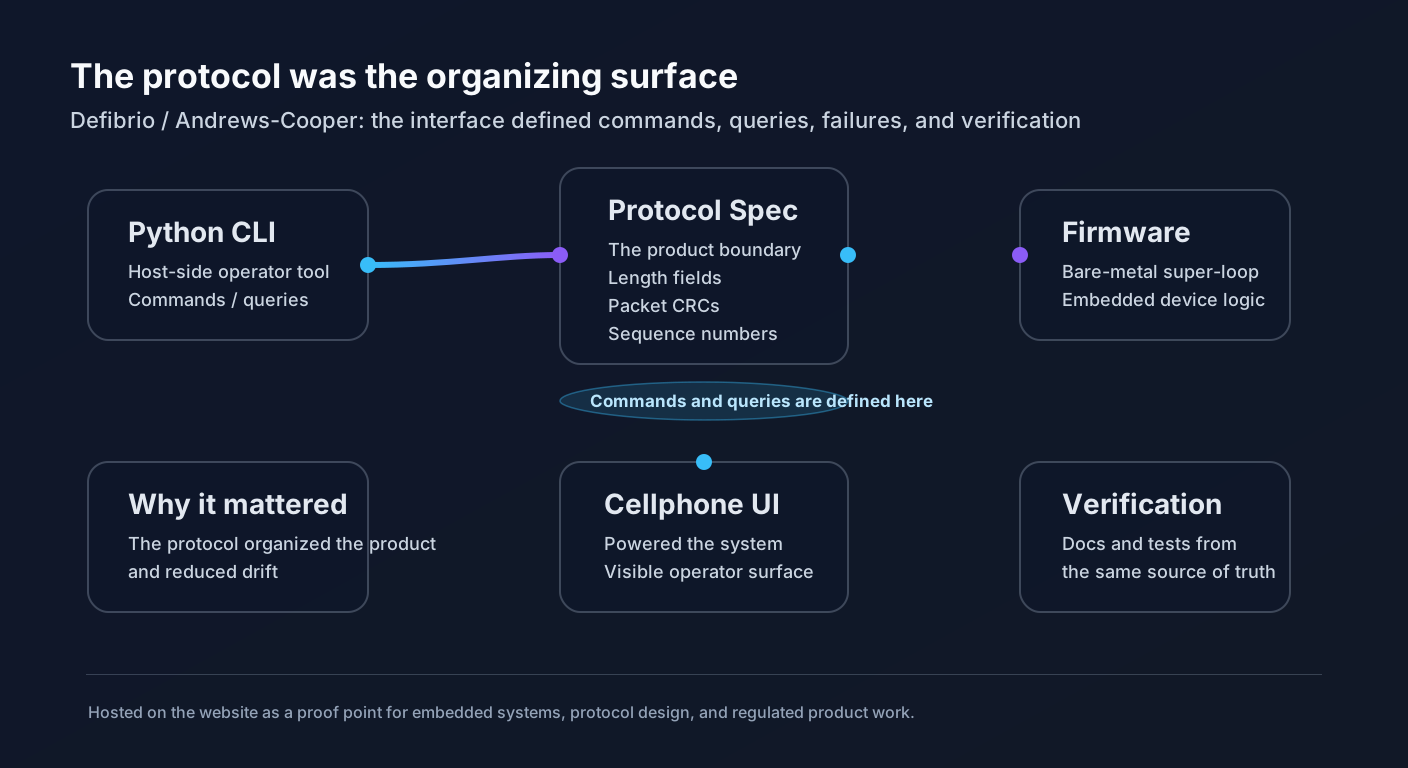
How standardizing a communication protocol on a smartphone-powered defibrillator project unblocked an entire engineering team and saved two months of development time.
A small business owner's account of running a complete SEO audit with an AI coding agent in one session, fixing every issue the same afternoon, and what it means for the $80 billion SEO industry.
The word "waste" smuggles in a verdict before the analysis begins. Theory of Constraints offers a sharper test: waste relative to what?
When Regulatory departments prioritize 'documentation stability' over 'engineering reality,' patient safety suffers. A systems view on the conflict between Compliance and Quality.
You cannot 'sprint' a circuit board design. A systems architect's view on why software methodologies break when applied to physics, and how Critical Chain solves the real constraint.
Why 'FTE Headcount' is a vanity metric that hides the real constraint: Nursing Minutes at the Bedside.
Most dashboards measure local efficiency at the expense of global throughput. Here is how to define the minimum dataset that actually drives system performance.
Why 'Scope Creep' is usually a symptom of a deeper strategic failure—in software, in hardware, and in healthcare.
The math is clear: 12 genuine advocates beat 500 LinkedIn connections. A Kirkland business owner explains why three-way email intros actually convert.
A proactive approach to discharge readiness that treats discharge delays as an input quality problem, not a process problem.
Analysis of 134 structural conflicts across 10 Washington State nursing CBAs reveals why higher wages aren't fixing nurse burnout.
A small business owner's account of automating tax preparation with AI coding agents, and what it suggests about the near future of knowledge work.
Why smart, well-run organizations reliably get stuck on solvable problems, and what tribal dynamics and cognitive limits have to do with it.
Matt Shumer is right that AI is about to change everything. But the real transformation isn't about job loss -- it's about discovering that most of the limits you've been working within were never real.
When you can build a custom import tool in fifteen minutes, the calculus on which subscriptions to keep changes dramatically.
How AI can dissolve complex multi-stakeholder conflicts by surfacing hidden assumptions, not by replacing human judgment.
A framework for turning complex inputs into choices stakeholders can act on.
Why small, measurable releases outperform big-bang delivery.
A concept for addressing the complex discharge problem at its source—by capturing discharge-relevant information during routine primary care, before any hospitalization occurs.
A reflection on Lean's definition of value, arguing that no work is neutral—activities either create value, enable it through necessary conditions, or subtract it as waste.
Six chronic healthcare frustrations — long wait times, expensive insurance, claim denials, hiring difficulties, tax levies, and burnout — traced to a single root cause using Theory of Constraints analysis.
Healthcare protects staff from radiation but expects unlimited psychological trauma absorption. This four-part series maps the structural conflict behind provider burnout using Theory of Constraints and proposes systemic solutions beyond resilience training.
Why moving fast is an undervalued strategic advantage for community hospitals.
Trying to plan a complex discharge at the moment of exit violates the basic physics of flow. Here is why the process must move upstream.
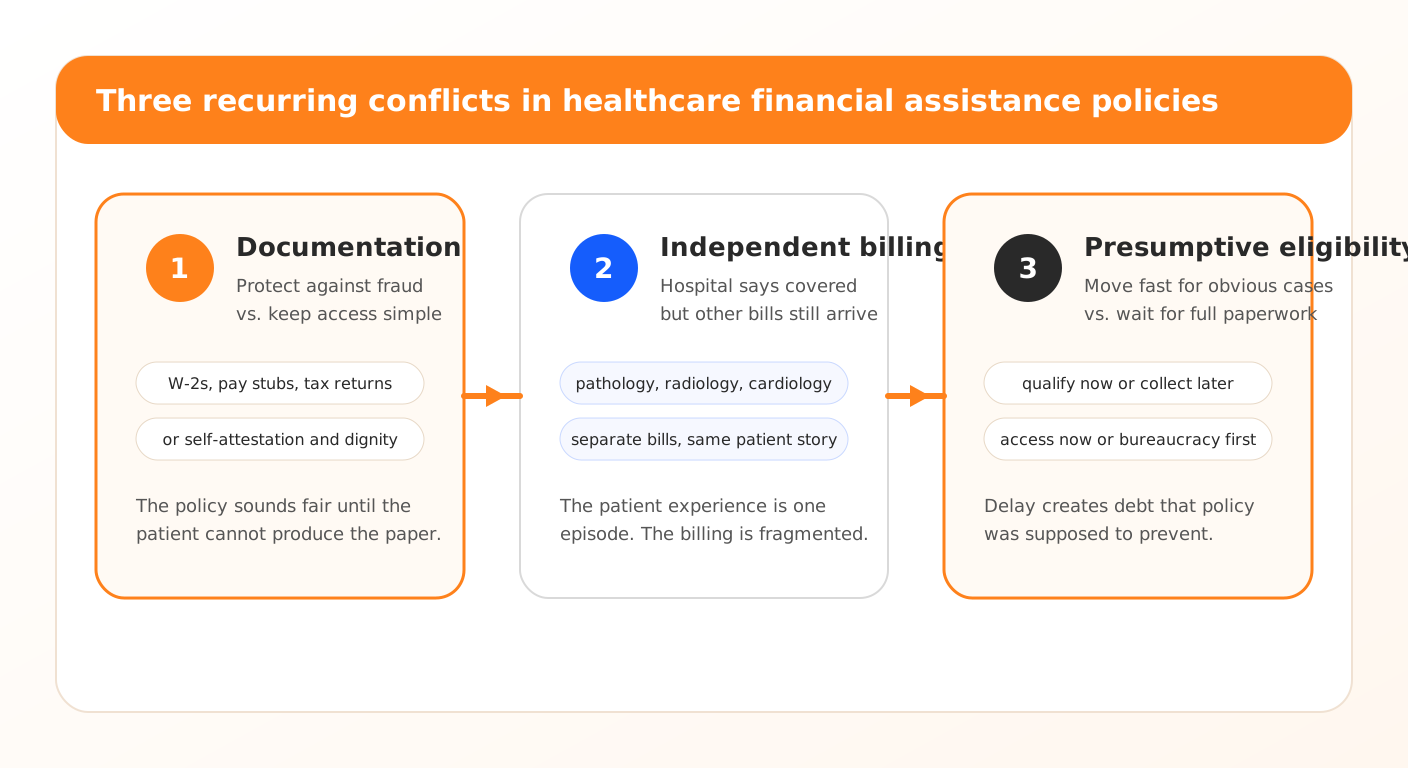
Give me any healthcare policy document and I will show you embedded structural conflicts. A real hospital financial assistance policy analyzed using Theory of Constraints to reveal three critical dilemmas and paths to resolution.
Why blame cultures destroy healthcare organizations and how to build accountability instead.
Discover how voice agents transform healthcare's most painful conversations by removing emotional friction from insurance claims, patient billing, and administrative battles that burn out staff and traumatize patients.
Why an outsider's perspective is a healthcare system architect's greatest asset — how decades in embedded systems engineering, Theory of Constraints, and AI provide a different lens on hospital operational challenges.